Irritation Around the Nose: Common Product and Environment Triggers
Your face is calm. The sides of your nose, however, have notes. Here is what touches that small patch of skin, and how to work out which of it matters.
Your face is calm. Your cheeks are behaving, your forehead has no opinions. The sides of your nose, however, have notes. A pink, slightly flaky strip in the creases. Stinging at the edge of the nostril about thirty seconds after moisturizer, gone in two minutes. A tender spot on the bridge by Friday. It is the smallest area on your face and it is filing the longest complaint.
There is a reason for that, and it is mostly logistics. The skin around the nose is where product pools, where glasses sit, where masks press, where tissues scrub, and where the wind arrives first. This guide maps what touches that patch of skin, which of it is worth a worry, and how to narrow it down without adding a single new product. It does not diagnose anything. Some of what turns up here is a skin condition that needs a dermatologist’s eyes, and we will say clearly when that is the next step.
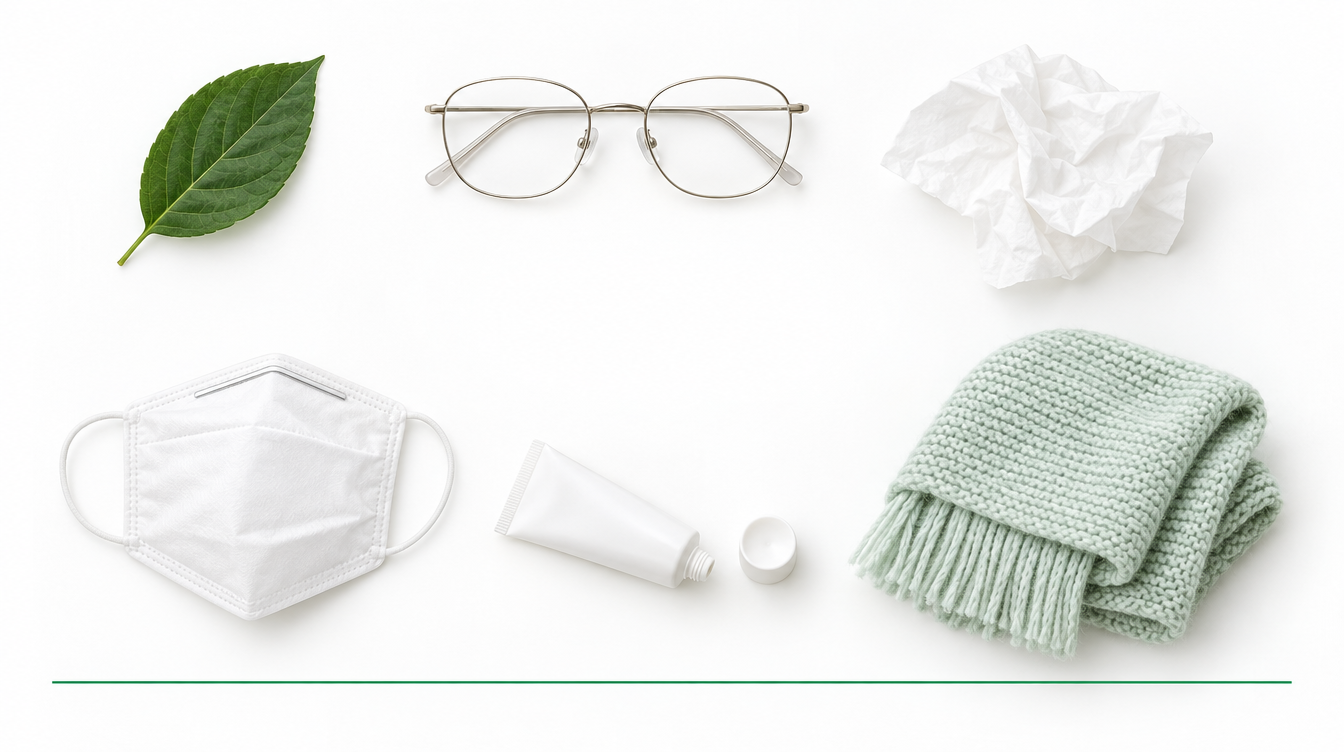
The short answer
| What touches the area | Why the nose gets it worst | What to try first |
|---|---|---|
| Leave-on products, especially actives | They collect in the creases beside the nostrils | Apply less there; protect the corners before a retinoid |
| Glasses | Nose pads press on one spot all day | Note whether the irritation matches the pads exactly |
| Masks | The top edge and nose wire sit on the bridge | Check the fit; give the area mask-free time where safe |
| Tissues and wiping | Repeated friction during colds and allergy season | Pat instead of rub; plain, unscented tissues |
| Wind and cold | The nose sticks out | Cover up outdoors in winter |
| Steroid creams used for weeks | A known pattern around the nose, mouth and eyes | Talk to a clinician before using longer |
Why this small patch collects trouble
Product pools there. Every leave-on product you smooth across your face drifts into the creases beside the nostrils and sits there, slightly concentrated, in a fold. That is why a dermatologist quoted by the American Academy of Dermatology suggests people with sensitive skin put a little petroleum jelly or a hydrating moisturizer at the corners of the nose and mouth, and under the eyes, before applying a retinoid [4]. It is not glamorous. It works on the same principle as masking tape before painting a baseboard.
Leave-on products and retinoids
The creases beside the nostrils, where product pools
Glasses and nose pads
The bridge, in the exact outline of the pads
Masks and nose wires
The bridge and the top edge of the mask
Tissues and wiping
The nostril edges and the tip
Wind and cold
The tip and the sides, first in line outdoors
Steroid cream used for weeks
Around the nose, mouth or eyes
Things rest on it. Glasses sit on the bridge all day. In one published case, a 35-year-old man developed a rash on the bridge of his nose and behind his ears two weeks after his frames were repaired; patch testing reacted to scrapings from the nose pads and the arms of the frame [6]. That is one case report, not a rate, but it shows the shape of the problem: irritation in a pattern that matches an object. Nickel is the most common contact allergen in the general population, found in 11.4% of people patch tested across 28 studies [7]. If you already know you react to nickel, metal parts that sit on your face deserve a look.
Masks press on the same real estate. During the SARS outbreak in Singapore, 109 of 307 health workers who wore N95 masks regularly, 35.5%, reported skin reactions: acne in 59.6% of them, facial itch in 51.4% and rash in 35.8% [5]. Those were hospital-grade masks worn for long shifts, not a cloth mask on the bus, but the pressure-and-friction lesson travels.
Weather hits it first. The American Academy of Dermatology lists wind and cold among rosacea triggers, notes windburn is common on rosacea-prone skin in winter, and suggests covering the face with a scarf outdoors [3]. Rosacea’s redness sits across the nose and cheeks [3], so the nose is front of house.
Tissues scrub it. Cold and allergy season means wiping the same few square centimeters dozens of times a day. Nobody needs a trial to tell them that is friction. Patting, plain tissues and a dab of a plain moisturizer you already tolerate are the boring answer.
When it is not a product question
Some rashes favor this exact area, and it is worth knowing their names so you know when to stop experimenting and book an appointment. We are not suggesting you have any of them; only an examination can tell.
- Seborrheic dermatitis can appear around the nostrils, as well as the eyebrows and beard, and tends to flare in colder months and with stress [2].
- Perioral dermatitis is named for the mouth but can appear around the nose or eyes. The American Academy of Dermatology notes that many people develop it after applying a corticosteroid to the skin for too long, and that clearing it means stopping all corticosteroids, including hydrocortisone cream, with the prescriber’s input [1].
- Rosacea brings redness across the nose and cheeks, with its own list of triggers from sun to hot drinks [3].
Here is the fight worth picking. The soothing aisle will happily sell you a cream for “redness around the nose”, and the drugstore will sell you hydrocortisone, and both feel like doing something. But if the rash is one of the patterns above, the wrong cream can feed it, and the steroid one can be part of how it started [1]. Not every flare is the product’s fault. Some of them are a condition with a treatment, and that treatment comes from a dermatologist, not from the twelfth bottle.
The worry budget
| Worth a worry | Not worth a worry |
|---|---|
| Using hydrocortisone on the area for weeks without a clinician | A single cold-weather week of flaky creases that settles with plain moisturizer |
| A rash that matches the outline of your nose pads or mask wire | A pink nose after a long walk in the wind that fades indoors |
| Redness that keeps returning in the same places despite a short routine | Stinging at the nostril edge from a retinoid that stops when you protect the corners |
| Spreading, swelling or a rash that also involves the eyelids or lips | One blown-nose week of tender skin during a cold |
| Stacking a calming serum, a balm and a new cream on the area at once | A short, boring routine while you work it out |
How to map what touches your nose
- Write down everything that meets the area for one week. Leave-on products, cleanser, sunscreen, glasses, mask, tissues, makeup, lip products that travel, any cream you dab on “just there”. Include anything prescribed, and note how long you have used each one.
- Note the exact pattern. Creases beside the nostrils, the nostril edge, the bridge, the tip. A strip that matches nose pads tells a different story from redness that follows where serum pools.
- Note the timing. Seconds after a product, by the end of a workday with a mask, after a cold walk, during a cold. The two-minute timer is useful here: stinging that fades within two minutes and never escalates is a different line item from redness that lasts hours.
- Change one thing. Protect the corners before your retinoid, or switch to plain unscented tissues, or put a strip of tape over the nose pads, or cover up outdoors. One change, then two weeks of watching. One new thing at a time applies to removals too.
- Do not start a new product on the area during the experiment. That includes a “redness” serum. If you need to try something new elsewhere on your face, put it through the seven-to-ten-day arm first.
- Take the log to a dermatologist if nothing clears it. A week of notes with the pattern and timing is far more useful than “it’s red sometimes”.
Exit plan: If something stings, wash it off with lukewarm water, do not reapply, and give your skin a few calm days before you try anything new. If you have been using a steroid cream on the area, do not stop a prescribed one without asking the prescriber, and book an appointment.
An illustrative example
This is a hypothetical case, used only to show the method. Sam has a pink, flaky strip beside each nostril every winter. Her log: retinol four nights a week, a new mask with a stiffer nose wire, a lot of tissue use during a cold, and a drugstore hydrocortisone she has dabbed on “the bad days” for about a month. Four suspects and one red flag. She protects the corners of her nose before the retinol, swaps to plain tissues, and books a dermatologist about the redness and the hydrocortisone rather than stopping or continuing on her own. The dermatologist gets a clear history in two minutes instead of a shrug.
Common mistakes
- Treating the nose like the rest of the face. It is not the same terrain. A product your cheeks tolerate can sting in the creases where it pools.
- Reaching for a stronger cream. The worst trade on the menu is a weeks-long steroid habit on the face without a clinician [1].
- Blaming the newest product when the pattern matches an object. If the rash outlines your nose pads or mask wire, the bottle may be innocent [6].
- Ignoring the season. Winter, wind and colds all arrive together and all aim for the nose [2][3].
- Assuming one passed arm test clears the nose. The arm is a tolerance check for that product on that patch. The nostril crease is a different venue.
Practical steps
- Keep the routine short with what a minimal routine includes, and add products back with one new thing at a time.
- If metal is a suspect, read nickel allergy and cosmetics.
- If the redness behaves like rosacea, read rosacea and skincare before you buy anything.
- If you are reacting and cannot find the cause, read how to identify the cause of contact dermatitis and take your log to a dermatologist.
When to see a clinician first. See a dermatologist if redness, flaking or a rash around your nose keeps coming back, does not settle when you simplify your routine, matches the outline of something you wear, or spreads to your eyelids or lips, or if you have been using a corticosteroid cream on the area. They can examine it, tell you what it is and decide whether patch testing makes sense. Seek urgent medical care for swelling of the face, lips or tongue, difficulty breathing, or a severe or rapidly spreading reaction.
Frequently asked questions
Why is the skin around my nose red and flaky?
Several things can do it, and a blog cannot tell them apart. Common culprits include product building up in the creases, friction from glasses, masks or tissues, cold and wind, and skin conditions that favor this area. A dermatologist can examine it and tell you which applies. Until then, simplify what goes on the area and change one thing at a time.
Can I put hydrocortisone cream on the redness around my nose?
Ask a clinician before using it for more than a few days. The American Academy of Dermatology notes that a rash around the mouth, nose or eyes often develops when a corticosteroid is applied to the skin for too long, and that clearing it means stopping all corticosteroids, including hydrocortisone, under medical guidance.
Could my glasses be irritating my nose?
They can. Nose pads press on the same spot all day, and a published case report described an allergic reaction on the bridge of the nose traced by patch testing to the nose pads and arms of a man's glasses. If the irritation sits exactly where the pads rest, mention that to a dermatologist.
Why does my retinoid sting around my nose?
Product tends to collect in the creases beside the nose, and that skin is thin and folds. A dermatologist quoted by the American Academy of Dermatology suggests people with sensitive skin put a little petroleum jelly or moisturizer at the corners of the nose and mouth before applying a retinoid. If stinging persists, ask your prescriber.
Sources and further reading
- American Academy of Dermatology, Red rash around your mouth could be perioral dermatitis
Patient guidance: the rash can also appear around the eyes or nose; possible causes include irritation from a skin care product or toothpaste, allergy, and applying a corticosteroid to the skin for too long; treatment involves stopping all corticosteroids, including hydrocortisone, with the prescriber's input, and seeing a dermatologist.
- American Academy of Dermatology, Seborrheic dermatitis: Overview
Patient guidance: the rash can appear beyond the scalp, including the eyebrows, beard and skin around the nostrils; flare-ups are more common in colder months and with stress.
- American Academy of Dermatology, How to prevent rosacea flare-ups
Patient guidance: rosacea causes redness across the nose and cheeks; triggers include sun, wind, cold, heat and hot drinks; warns against skin care products containing menthol, camphor or sodium lauryl sulfate.
- American Academy of Dermatology, National Healthy Skin Month: dermatologists provide tips on caring for your skin, hair and nails
News release, 25 October 2022. A dermatologist advises people with sensitive skin to apply petroleum jelly or a hydrating moisturizer under the eyes and to the corners of the nose and mouth before applying retinoids to the face.
- Foo, Goon, Leow and Goh, Adverse skin reactions to personal protective equipment against severe acute respiratory syndrome: a descriptive study in Singapore
Contact Dermatitis 2006;55(5):291-294, doi:10.1111/j.1600-0536.2006.00953.x. Questionnaire of 322 health workers; 109 (35.5%) of 307 regular N95 mask users reported acne (59.6%), facial itch (51.4%) and rash (35.8%).
- Nakada, Iijima and Maibach, Eyeglass frame allergic contact dermatitis: does tacrolimus prevent recurrences?
Contact Dermatitis 2005;53(4):219-221, doi:10.1111/j.0105-1873.2005.00664.x. Case report: a 35-year-old man with lesions on the nasal bridge and behind the ears after his frame was repaired; patch testing was positive to scrapings of the nose pads and temples.
- Alinaghi et al., Prevalence of contact allergy in the general population: a systematic review and meta-analysis
Contact Dermatitis 2019;80(2):77-85, doi:10.1111/cod.13119. 28 studies, 20,107 people patch tested; pooled prevalence of contact allergy 20.1%; nickel the most common allergen at 11.4%, then fragrance mix I at 3.5%.
Sources checked October 29, 2026. This is an editorial summary, not a systematic review or individual advice.